As an international wholesale buyer sourcing from Indonesia, understanding the nuances of Incoterms is essential for optimizing your supply chain. Indonesia is a leading exporter of premium furniture, with a focus on sustainable and legally compliant timber products. Familiarizing yourself with Incoterms such as FOB, CFR, and CIF will ensure that your import operations are efficient and cost-effective, aligning with compliance and quality standards.
Understanding Incoterms for Furniture Importers
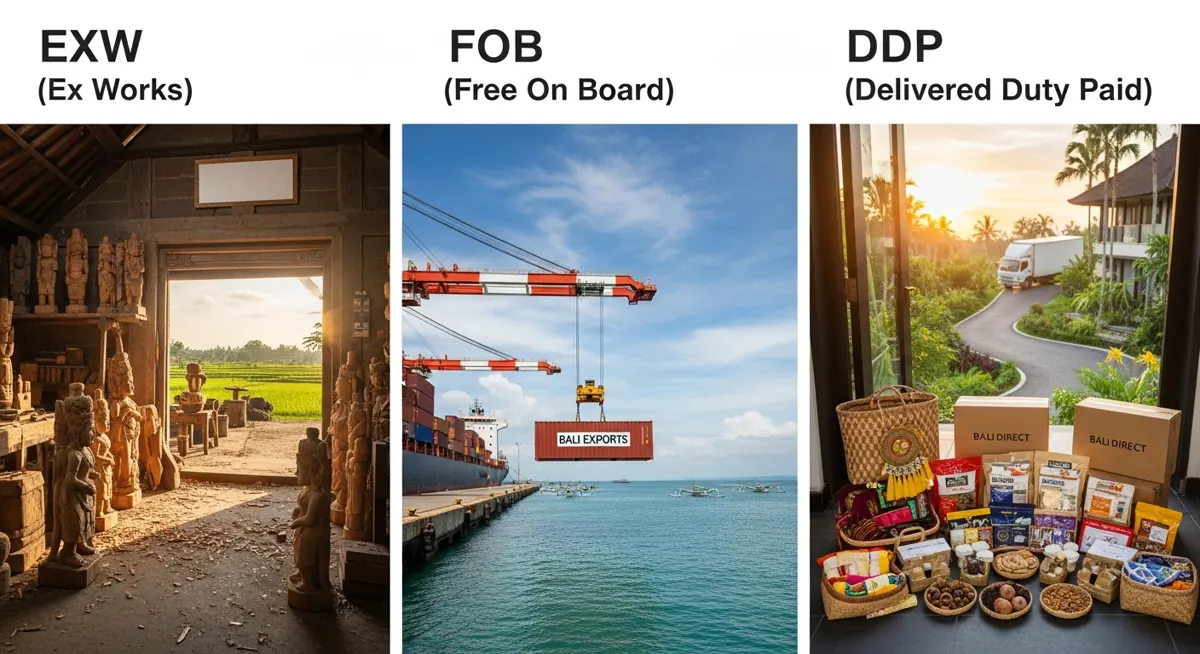
Incoterms, or International Commercial Terms, are vital for importers to understand as they define the responsibilities of buyers and sellers in international trade. For furniture importers dealing with Indonesian suppliers, the most relevant Incoterms are FOB (Free on Board), CFR (Cost and Freight), and CIF (Cost, Insurance, and Freight). Each term determines who is responsible for transportation costs, risk, and insurance at various stages of the shipping process. For instance, FOB is widely used for its simplicity, where the seller handles export clearance and loading at the Indonesian port, and the buyer manages the sea freight and insurance. Understanding these terms helps in strategic planning and cost management, ensuring that the import process aligns with your business objectives.
FOB: Free on Board
FOB, or Free on Board, is the most common Incoterm used in the Indonesian furniture export industry. Under FOB, the seller is responsible for the costs and risks associated with transporting the goods to the port, handling export clearance, and loading them onto the vessel. Once the goods are on board, the buyer assumes responsibility for the costs and risks, including sea freight and insurance. This term provides the buyer with greater control over shipping logistics and costs, allowing for the selection of preferred shipping lines and insurance providers. The main furniture export ports in Indonesia are Tanjung Perak in Surabaya, Tanjung Emas in Semarang, and Benoa in Bali. By choosing FOB, buyers can optimize their logistics strategies and potentially reduce shipping costs.
CFR: Cost and Freight
CFR, or Cost and Freight, involves the seller covering the costs of transporting the goods to the destination port, but not the insurance. This Incoterm is beneficial for buyers who prefer the seller to manage logistics up to the destination port, providing a clearer picture of total costs without the responsibility of arranging sea freight. However, the buyer must arrange and pay for insurance separately. CFR can be advantageous for companies new to international trade, as it simplifies the logistics process by leveraging the seller’s expertise in handling sea freight. Importers should ensure they have adequate insurance coverage in place to mitigate risks associated with the transport of goods across international waters.
CIF: Cost, Insurance, and Freight
CIF, or Cost, Insurance, and Freight, is similar to CFR but includes insurance coverage. Under CIF, the seller arranges and pays for transportation to the destination port and provides insurance against the risk of loss or damage during transit. This Incoterm offers peace of mind to buyers, knowing that the goods are insured until they reach the destination port. CIF is particularly useful for buyers unfamiliar with international shipping logistics, as it reduces the complexity of managing multiple service providers. However, buyers should verify the insurance coverage details to ensure it meets their requirements. Indonesian suppliers often offer CIF for convenience, making it a popular choice among international buyers.
SVLK Certification and Compliance
Indonesia’s mandatory SVLK (Sistem Verifikasi Legalitas Kayu) certification is crucial for ensuring the legality and traceability of timber used in furniture production. All wood-product exporters must ship with a V-Legal Document, proving the timber is legally harvested. This certification supports due diligence requirements under the EU Deforestation Regulation and the US Lacey Act. While SVLK provides strong legality evidence, importers must still conduct their own due diligence. Some factories also offer FSC certification as an additional sustainability credential. More information on SVLK can be found at the official SVLK website. To learn more about the certification process, visit our furniture export shipping process page.
Container Loading and MOQ
Understanding container loading capacities and minimum order quantities (MOQs) is essential for optimizing import operations. Indonesian exporters typically use 20ft, 40ft, and 40ft High Cube containers, with usable loading capacities of approximately 28 CBM, 58 CBM, and 68 CBM, respectively. Bulky items like upholstered furniture tend to fill the container volume before reaching weight limits, while denser knock-down items may hit weight limits first. MOQs typically range from 5-20 pieces for solid-wood furniture and 10-30 pieces per model/color for woven/rattan items. A minimum order usually requires filling one 20ft container. Mixed-model and mixed-material containers are common, provided each item meets its MOQ. For detailed guidance, explore our understanding MOQ and container loads section.
Lead Times and Payment Terms
Lead times for furniture production in Indonesia typically range from 30 to 60 days, depending on order size and finishing requirements. Sea-freight transit times vary by destination, taking approximately 3-5 weeks to reach the US, EU, and Australia, with shorter times to the Middle East and Asia. It is important to confirm current schedules with your supplier. Payment terms usually involve a deposit of approximately 30-50% by T/T (bank transfer) to initiate production, with the balance payable against a copy of the Bill of Lading (B/L). Terms may be negotiable for repeat buyers. For a comprehensive overview of our payment and shipping process, refer to our shipping process guide.
Materials and Export Hubs
Indonesia is renowned for its diverse range of high-quality materials used in furniture production. Common materials include solid teak and reclaimed/recycled teak from Jepara, mahogany, suar/acacia for live-edge designs, natural and synthetic rattan, water hyacinth, seagrass, genuine leather, and stone/terrazzo tops. Jepara is a historic hub for teak and classic carved furniture, while Bali is known for contemporary design-led pieces. Factories offer OEM/ODM services, manufacturing to buyer specifications with pre-production samples available. The main export markets include the US, EU, Australia, the Middle East, and Japan. For more information on materials, visit our homepage or contact our team.
For detailed quotes tailored to your specific requirements, we invite you to request a quote. Contact us via WhatsApp at +62 811-3941-4563 or email at [email protected]. For further inquiries or to start your order, visit our contact page.